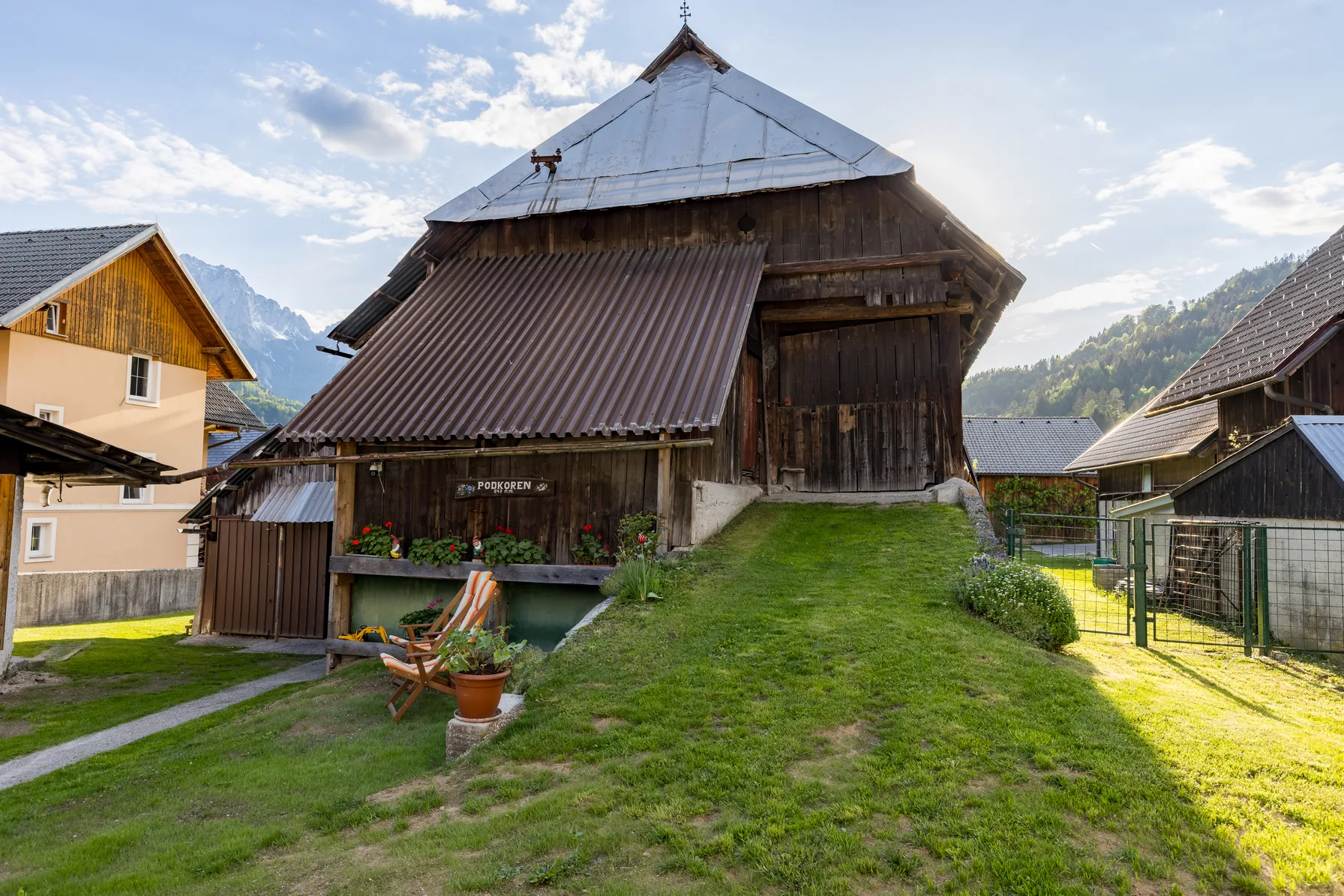
Podkoren, Kranjska Gora
At the crossroads of Slovenia, Italy, and Austria, your gateway to the Julian Alps
Podkoren is a picturesque alpine village at the western tip of the Kranjska Gora municipality. With traditional Slovenian architecture, lush meadows, and towering peaks all around, it offers an authentic mountain experience far from the crowds, while being just 3 km from the vibrant center of Kranjska Gora.
The village is best known for hosting the Podkoren FIS ski slope, which is just 200 meters from Alpine House 77. In summer, the same landscape transforms into a paradise for hikers, cyclists, and nature lovers.
The world-famous Planica Nordic Centre is home to legendary ski jumping hills and host of FIS World Cup events. It also offers cross-country skiing, biathlon, a zip line, and the Nordic Walking Park. In summer, the valley is a starting point for hikes into the stunning Tamar valley.
The iconic emerald-green Lake Jasna lies at the foot of the Julian Alps. Crystal-clear waters reflect the surrounding peaks, making it one of Slovenia's most photographed spots. Perfect for a peaceful walk, a refreshing swim in summer, or simply soaking in the mountain panorama.
Just a 15-minute walk from the house. This protected wetland and source of the Sava Dolinka river features an emerald-green lake where you can watch water bubbling up from underground springs. A wooden boardwalk leads through the marshland for a serene nature experience year-round.
At 1,611 m, the highest mountain pass in Slovenia and one of the most scenic alpine roads in Europe. 50 hairpin bends through breathtaking scenery. At the top: panoramic views, the Russian Chapel, and trailheads for hikes to Slemenova Špica, Prisank, and the trail down to the emerald Soča river valley.
One of Slovenia's most spectacular waterfalls, plunging 52 meters from a rocky overhang in the Vrata valley. You can walk behind the curtain of water on a natural path carved into the rock. A wonderful half-day excursion through pristine forest, especially impressive in spring.
Above Planica, beneath the soaring pyramid of Mt Jalovec, the Tamar valley is one of the most beautiful corners of the Julian Alps. A gentle gravel road leads through the glacial valley to the Tamar mountain hut, and a short climb beyond reaches the Nadiža waterfall and the very first spring of the Sava Dolinka, Slovenia's longest river. An easy walk for families and a fine ride for mountain or e-bikes.
A car-free cycle path on a former railway runs right past the house. Head west and within a few easy kilometres you cross into Italy and join the Ciclovia Alpe Adria, which rolls on toward Tarvisio and, eventually, Grado on the Adriatic. Head east and the valley carries you gently down to Mojstrana, the gateway of Triglav National Park. Flat, paved and family-friendly in both directions, with bikes and e-bikes for hire in Kranjska Gora.
You can reach Kranjska Gora on foot as well. A lovely path leads there across open meadows and through woodland, a little longer than the road but well worth it for the quiet and the mountain views along the way. On the way back you can take the shorter route along the foot of the ski slope. About an hour each way at an easy pace.
Few places let you tee off in three countries from one house. The nine-hole alpine course on the edge of Kranjska Gora is six minutes away, and you can even ride there along the valley cycle path. Across the borders, two eighteen-hole courses wait within half an hour: Golf Senza Confini above Tarvisio in Italy and Schloss Finkenstein near Faaker See in Austria. And for a grand day of golf, Royal Bled, Slovenia's oldest and most celebrated course, founded in 1937, is forty minutes down the valley. Courses are open roughly from April to November; bring your club membership or handicap card.
The house sits at the foot of the Korensko sedlo, the pass that drops into Austrian Carinthia, and a short way up the road past Rateče three countries meet at a single peak. That tri-border position is the key to the food here. At heart this is alpine, mountain-farmed cooking: buckwheat, foraged mushrooms, river trout, game, and honey from the Carniolan bee that is literally named after this region. But it carries a Carinthian accent from over one pass and a Friulian one from over another.
One honest word before the food, because it can save you a few forgettable meals. Many of the restaurants on the main street in Kranjska Gora serve a similar big mixed-grill platter, built for hungry skiers. It is tasty and generous, but it is not really local cooking, and it is where the valley is at its least surprising. The best food here is usually quieter, in the villages, and often cheaper.
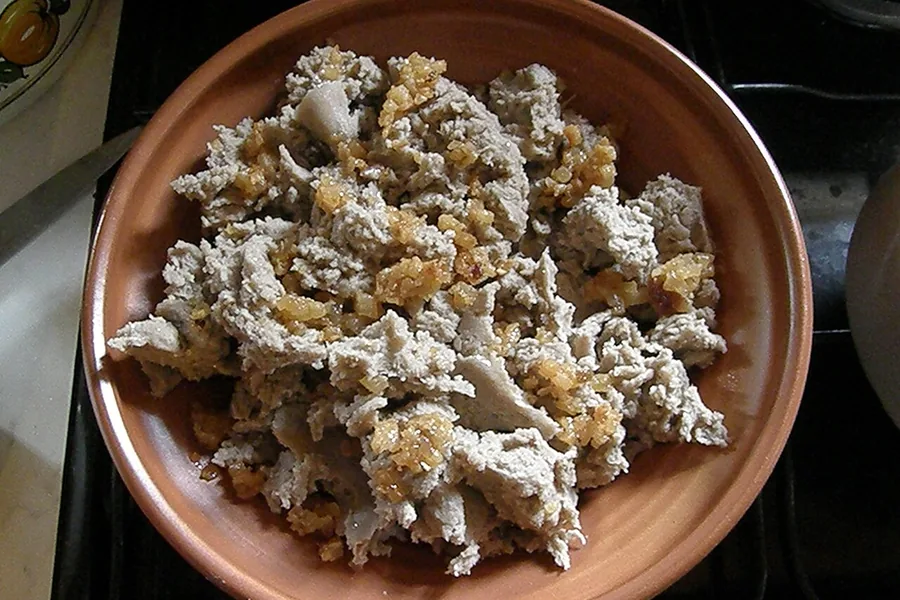
The valley's true staple: coarse buckwheat cooked into soft, nutty crumbles, traditionally topped with cracklings (ocvirki) or served in a bowl of warm milk. Mountain food in the most literal sense, cheap, filling, and exactly what you want after a day on the slopes or the trails. If a kitchen has it on the menu, they take the local tradition seriously.
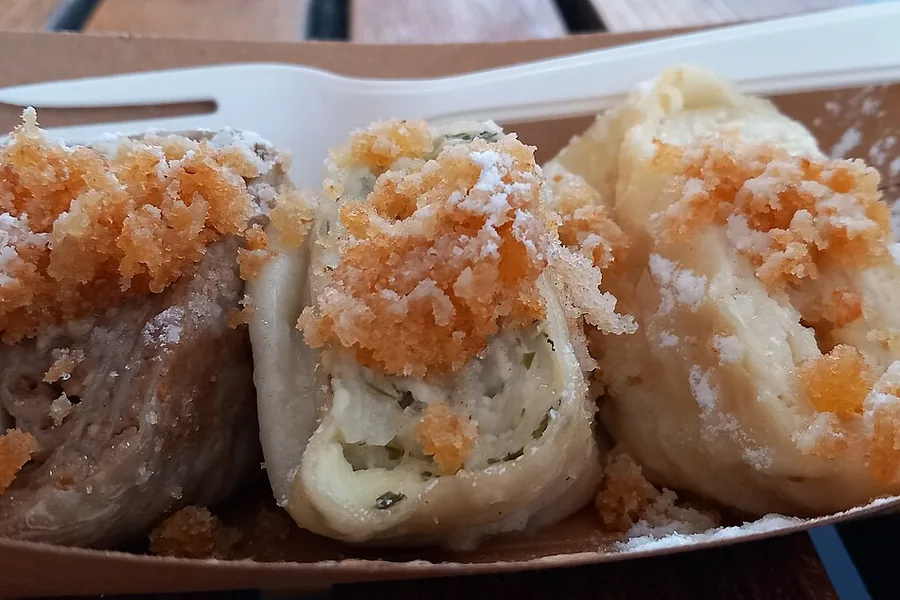
Thin dough rolled around a filling, then boiled or baked. The classics are skutni (curd cheese) and orehovi (walnut), but you will also find buckwheat versions, and they come both savoury and sweet. Many places will happily do you a plate that is half and half. A good štrukelj is one of the great simple pleasures of this region's cooking.
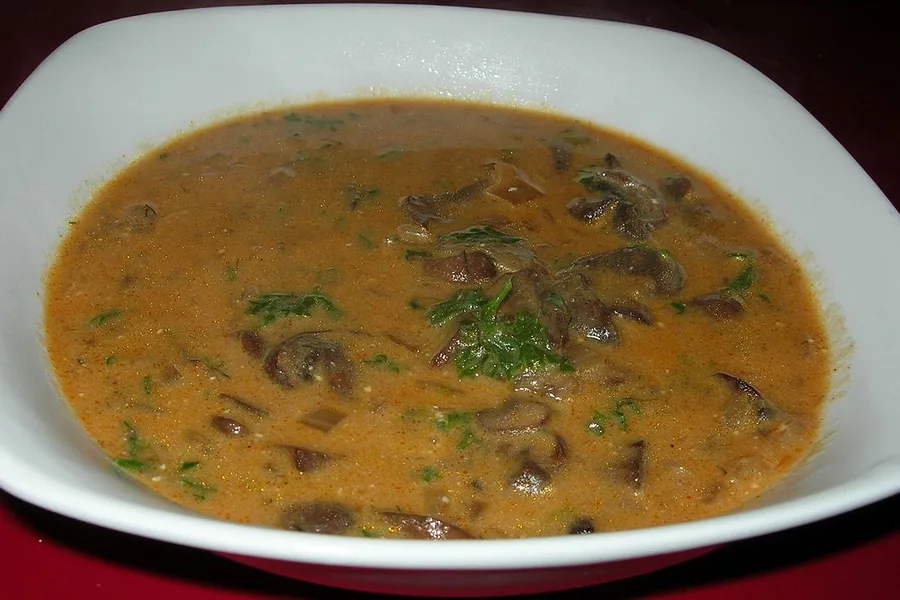
The forests below the Martuljek waterfalls and across the Triglav National Park are full of porcini and chanterelles, and people here forage seriously. In season, mushroom soup is not a menu cliché, it is made from things picked that week. Order it when it is fresh.
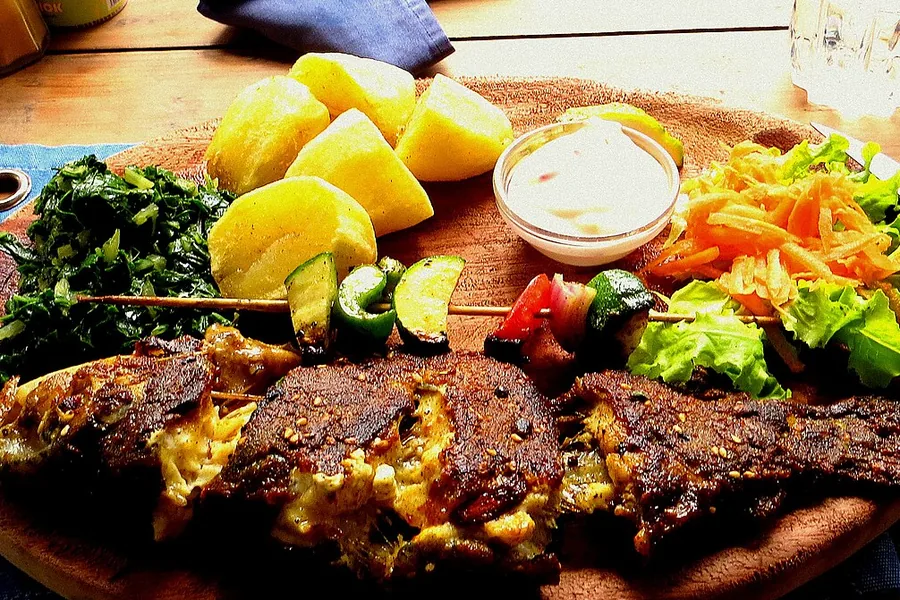
The Sava Dolinka and the valley's cold streams mean trout is genuinely a local fish here, not a flown-in one. Grilled simply with potatoes and garlic, it is one of the lighter, better things on a traditional menu.
A venison goulash (jelenov golaž), usually with žganci or homemade pasta, is the proper cold-weather order. This is hunting country on the edge of the national park, and the game is local, a richer, slower dish for a snowy evening in.
The village of Rateče has its own dumpling specialty you simply will not find a few valleys over: pockets of unleavened dough filled with curd and polenta, with a sweet version made with dried pears. A little piece of edible local identity rather than something off a national menu. Worth seeking out in the village itself, at Gostišče pri Žerjavu.
Two things appear on almost every menu here and are worth understanding. The mixed-grill platter (mešano meso) is generous and tasty but pan-Balkan rather than alpine. And prekmurska gibanica for dessert is delicious, but it comes from the flat far east of the country, the opposite corner from these mountains. Order them by all means; just know they are not the local kitchen.
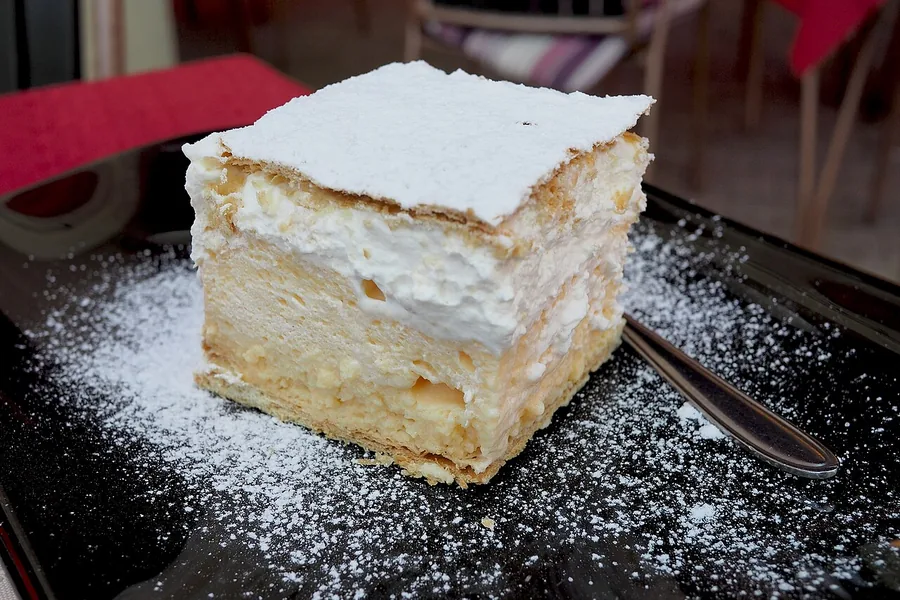
You are 35 minutes from Bled, home of the kremšnita, a square of vanilla custard and cream between flaky pastry that is a regional institution. Closer to home, look for potica (a rolled nut cake, usually walnut) and sweet štruklji. To drink: domače žganje (fruit brandy, the juniper brinjevec suits the landscape), medica (honey mead, again thanks to the Carniolan bee), a borovničevec (blueberry liqueur) after a hike, and a growing list of Slovenian craft beers on tap.
These are not stars copied off a map, they are the places we actually eat and send friends to. Almost all are in the villages rather than the main street, which is rather the point.
A proper rustic mountain hut a few minutes away. The food is homemade and the welcome is genuine, ask and they will happily do you štruklji half savoury, half sweet. Hours can be shorter midweek, so it is worth checking ahead.
The old-school family place we point people to when they want village cooking without the main-street markup. This is where to try the Rateče dumplings, the trout, and a slice of gibanica done properly.
A farm hut you reach on a 30 to 45 minute walk up past the Martuljek waterfalls. The štrukelj is blueberry and the view does half the work; the walk there is as much the point as the food. It tends to open at weekends, so check before you set out.
Sits near the source of the Sava and the Zelenci nature reserve. Good goulash and polenta, and an easy break if you are already out that way.
If you do want the full traditional Kranjska Gora experience, a mountain of food, dark beer, a busy room, these are the institutions, and the food is properly local. Reserve in season, because everyone else has the same idea.
For the evenings the kids want pizza and not žganci: Bedanc (right by the slope) and FIGO (the most refined of them) in town, or Gostilna Jožica down in Gozd Martuljek, a family place with a cult following on our side of the valley. Days can vary midweek, so a quick check ahead helps.
Alpine House 77 puts you at the heart of the Julian Alps.
Secure Your StayThe valley cycle path runs right past the house in both directions.
The route is the highlighted line. Drag and zoom to explore.